 Bluebird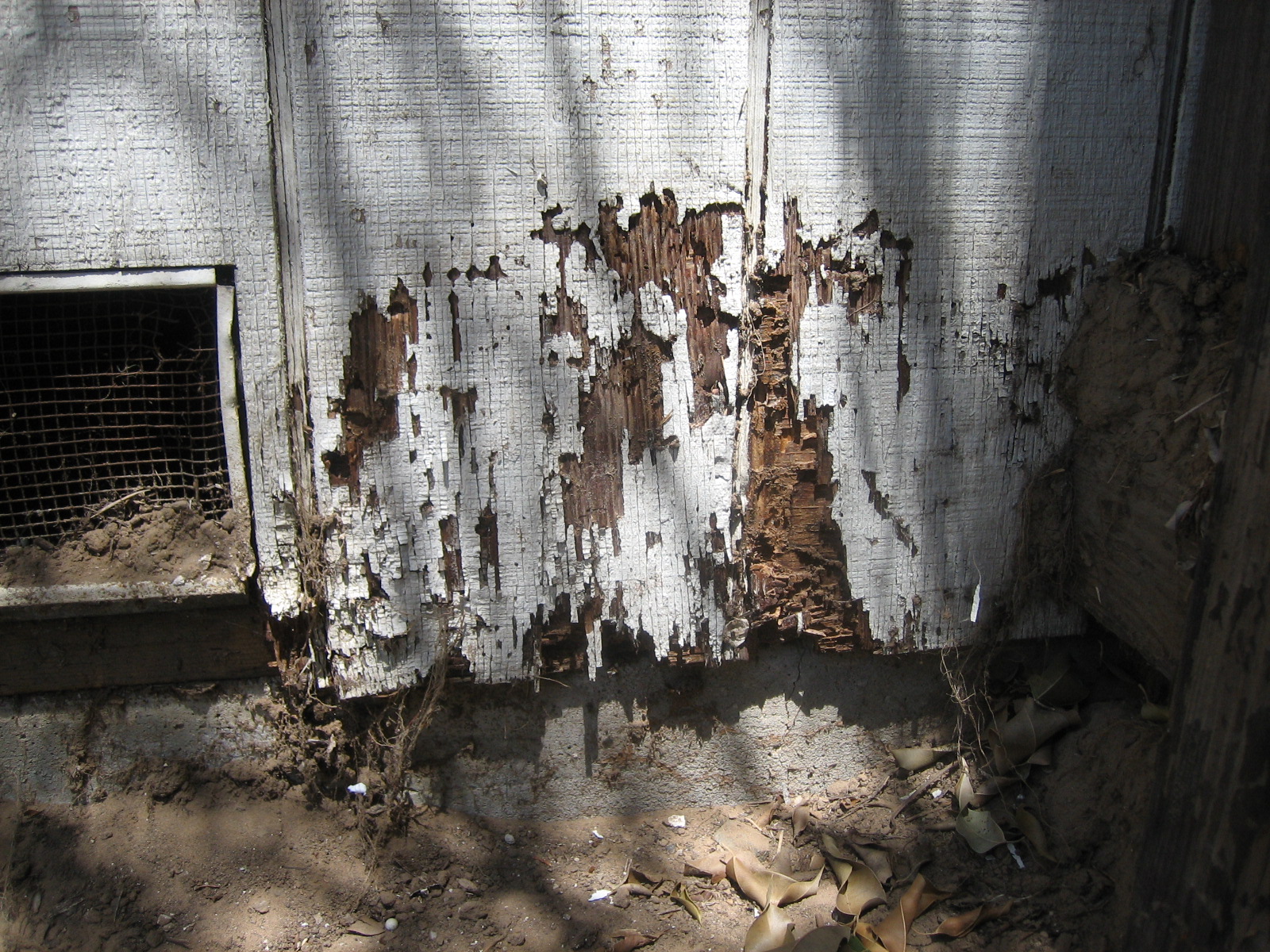
Selling a House With Termite or Pest Damage
Most homeowners find out about termites the worst possible way: a buyer's inspector pokes a screwdriver into a sill plate, it sinks in like it's going into cork, and a deal that felt finished suddenly has a new line item. The second surprise usually comes a day later, when the owner calls their insurance company and learns that the policy they've paid for years almost certainly won't cover a dime of it.
That combination (a defect you have to deal with and no insurance money to deal with it) is what makes pest damage feel so much bigger than it often is. This guide breaks down what buyers and lenders actually look for, what each of our four states expects you to disclose, and how to decide between treating and repairing first or selling the house as it stands.
- Standard homeowners policies treat termite damage as a preventable maintenance issue and exclude it, so repair money almost always comes out of your pocket or your sale price.
- An inspection showing prior, treated damage with paperwork is usually a much smaller problem than one showing an active infestation.
- Florida uses its own state inspection form (FDACS-13645); New Jersey, Connecticut and New York generally use the national NPMA-33 WDI report.
- If you know about termite damage, plan to disclose it. NJ and FL case law and the mandatory CT and NY disclosure forms all point the same way.
- VA buyers need a wood-destroying insect inspection in many areas, while cash buyers typically don't require one at all.
Why won't insurance pay for termite damage?
Homeowners policies are built to cover sudden, accidental events: a fire, a windstorm, a pipe that bursts. Termites work slowly over months or years, and insurers treat that kind of damage (along with the cost of treatment and prevention) as a maintenance problem the owner was expected to catch. That exclusion is close to universal.
There's one narrow exception worth knowing. If a covered event, such as a burst pipe, causes damage and termites happen to be discovered in the same area, the insurer may pay for the water damage while still excluding the insect damage itself. It's not a loophole for getting the termite repair paid for, but it's worth mentioning to your adjuster if the timing overlaps. Moisture and termites often travel together, which is why many sellers dealing with pests are also reading up on selling a house after water damage. A leaking roof is one of the most common sources of that moisture, so if yours is near the end of its life, our guide to selling a home with a failing roof is worth reading too.
What does the inspection report actually say, and who asks for one?
The paperwork depends on where your house is. In New Jersey, Connecticut and New York, the standard document is the NPMA-33 Wood Destroying Insect (WDI) report. Florida is the outlier: it uses its own state form, the FDACS-13645 Wood-Destroying Organisms (WDO) Inspection Report, and that is the only recognized form for Florida transactions. If you've heard someone say "just get a WDO," they're describing the Florida process. For everything else a buyer's inspector will be checking, see our guide on what to look for during a home inspection.
Whether a buyer needs one at all depends mostly on the loan:
- VA loans require a WDI inspection statewide in Florida, New Jersey and Connecticut. In New York the requirement applies only in listed counties, including the five boroughs, Long Island, Westchester, Rockland, Orange, Putnam, Dutchess, Ulster, Sullivan, Greene, Delaware, Columbia and Broome. VA updated that map effective July 1, 2025.
- FHA and VA rely on the NPMA-33 unless a state mandates its own form, which is why Florida buyers get the state form instead.
- Conventional lenders usually don't require one unless the appraiser spots damage.
- Cash buyers generally don't require one at all.
What the report says matters as much as whether it exists. An active infestation normally triggers a demand for treatment, and sometimes for structural repair. A report showing only prior damage that was treated, backed by receipts or a transferable warranty, is usually far less alarming to buyers. Those treatment records are some of the most valuable paperwork you own. It's also worth knowing that carpenter ants, powderpost beetles and wood-decay fungi show up on these reports too. Roaches, rodents and bed bugs don't, because they aren't wood-destroying, but that doesn't take them off the table for disclosure, as New Jersey's leading roach case shows.
Do you have to disclose termites? It depends on the state, but plan on yes
The rules get to the same place by different roads:
- Florida: there's no mandatory statewide condition form, but under Johnson v. Davis (1985), a seller must disclose known facts that materially affect value and aren't readily observable. Hidden termite damage fits that description.
- New Jersey: the leading case, Weintraub v. Krobatsch (1974), is literally about a roach infestation. The court held that a seller's knowing failure to disclose a hidden, material defect could be fraudulent concealment and support undoing the sale. NJ also uses a Seller's Property Condition Disclosure Statement.
- Connecticut: the mandatory Residential Property Condition Disclosure Report asks about wood-destroying insects. If you don't provide the form, the buyer gets a $500 credit at closing.
- New York: the Property Condition Disclosure Statement has been mandatory since March 20, 2024, and the old $500 opt-out credit is gone. The form includes a termite and insect question.
Across all four states, the practical advice lines up: disclose what you know and hand over the treatment paperwork along with it. Hiding a known infestation is one of the regrets sellers mention most, because the buyer's inspector usually finds it anyway, and discovery after closing is where the legal exposure lives. Not every disclosure question is about the physical house, though; whether you have to mention a death in the home follows very different rules, covered in our guide to selling a stigmatized property.
Treat and repair first, or sell as-is?
These are two different decisions, and it helps to separate them.
Treatment is usually the easier call. Its cost is typically modest relative to the confidence it buys. A buyer reading "active infestation" pictures the worst, while a buyer reading "treated, with warranty" moves on to the next item. If you're selling on the open market, treating first is almost always worth it.
Structural repair is where sellers get stuck. Replacing damaged sill plates, joists or framing can be expensive, and nobody knows the real number until the walls or floors are opened up. As a rough guide, cosmetic repairs (patched drywall, refinished trim) often run $300 to $2,000, while structural work — replaced sills, joists or subfloor — commonly runs $5,000 to $15,000, and severe cases can exceed $30,000. The real number depends on what's behind the drywall, which is why a contractor's walkthrough matters more than any average.
In practice, sellers tend to land on one of three paths:
- Treat and repair, then list. Works best when the damage is limited, you have cash on hand, and you're not in a hurry.
- Treat, then offer a repair credit. Common on the open market. You avoid managing contractors, but the buyer's lender still has to be comfortable with the condition.
- Sell as-is to a cash buyer. The buyer prices the unknowns in and takes on the repair risk. There's no lender demanding a WDI report and no back-and-forth over a pest report.
If the damage has gone far enough to trigger a building-department issue, that becomes its own conversation; our guide to selling a house with code violations covers that situation.
Frequently Asked Questions
Will my homeowners insurance cover termite damage before I sell?
Almost certainly not. Standard policies exclude insect damage and treatment as a maintenance issue. The narrow exception is damage from a separate covered event, like a burst pipe, but the termite damage itself stays excluded.
The termites were treated years ago. Do I still have to mention it?
If you know about it and it's material, assume yes. Connecticut's and New York's mandatory forms ask directly, and courts in New Jersey and Florida impose a duty to disclose known hidden defects. The good news is that old, treated damage with documentation rarely scares buyers the way an undisclosed surprise does.
Does every buyer's lender require a termite inspection?
No. VA loans require one statewide in FL, NJ and CT and in many downstate and Hudson Valley counties in NY. Conventional lenders usually only ask if the appraiser flags damage. Cash buyers typically skip it entirely.
Is Florida's WDO report the same as a WDI report?
They cover the same ground, but Florida requires its own state form, the FDACS-13645. In New Jersey, Connecticut and New York, the standard is the national NPMA-33 WDI report.
The Damage Is Knowable. The Uncertainty Is What Costs You.
Termite damage sounds like a catastrophe, but what actually sinks sales is not knowing: not knowing how far it goes, what a repair will cost, or whether a buyer's lender will balk. Once you pin those unknowns down, with a treatment record, a contractor's opinion, or a buyer who's willing to take the risk off your hands, the path forward gets much clearer.
At Bluebird Acquisition, we buy homes with active termite damage, old treatment histories and wood rot as-is: no tenting before closing, no chasing repair estimates, and no renegotiating over a pest report. We look at the property, make a cash offer, and close on your timeline.
📞 Call or text us directly at 217-408-2781
🌐 bluebirdacquisition.com
This article is general information, not legal, financial, or tax advice. Laws, processes, and programs vary by state — consult a licensed attorney, CPA, or financial advisor before making decisions about a specific property.


